

Restore a more natural, youthful appearance by addressing residual sagging, volume loss, and prior surgical changes with a revision facelift in Monterey. David T. Morwood, MD, FACS, analyzes each anatomic layer, listens to your specific goals, and develops a custom-designed facial rejuvenation plan to refine results while avoiding an overly pulled, unnatural look.
Before & After Revision Facelift
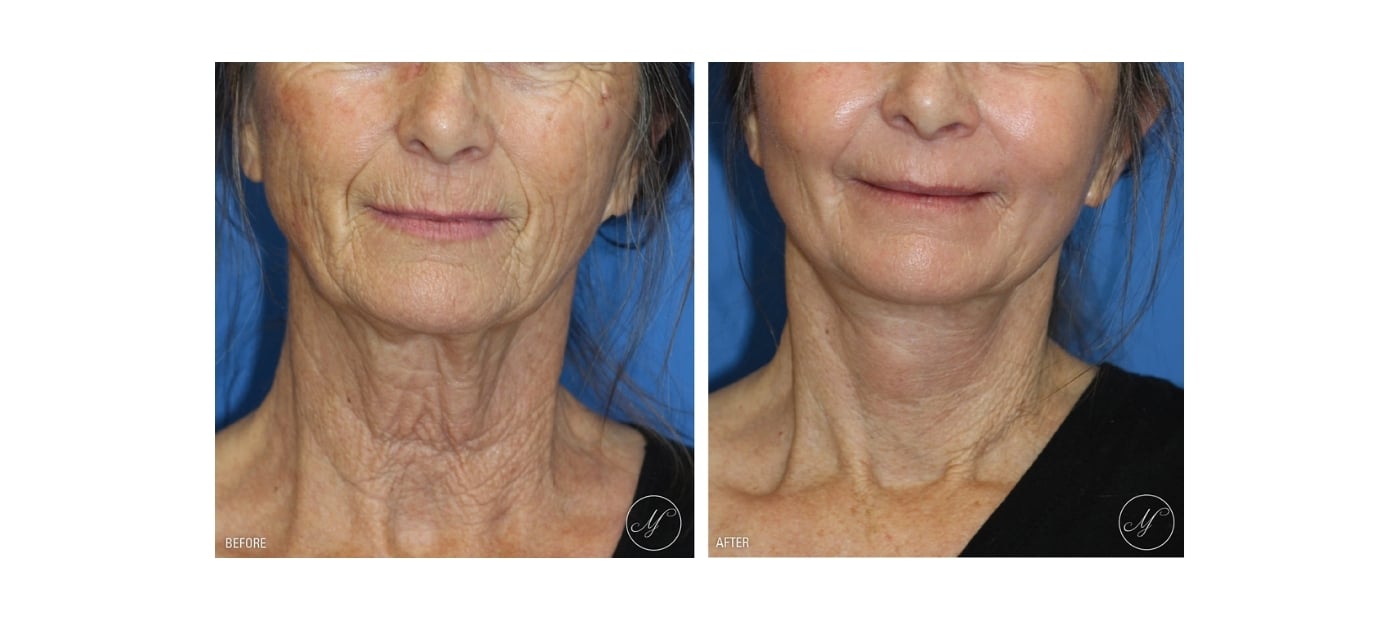
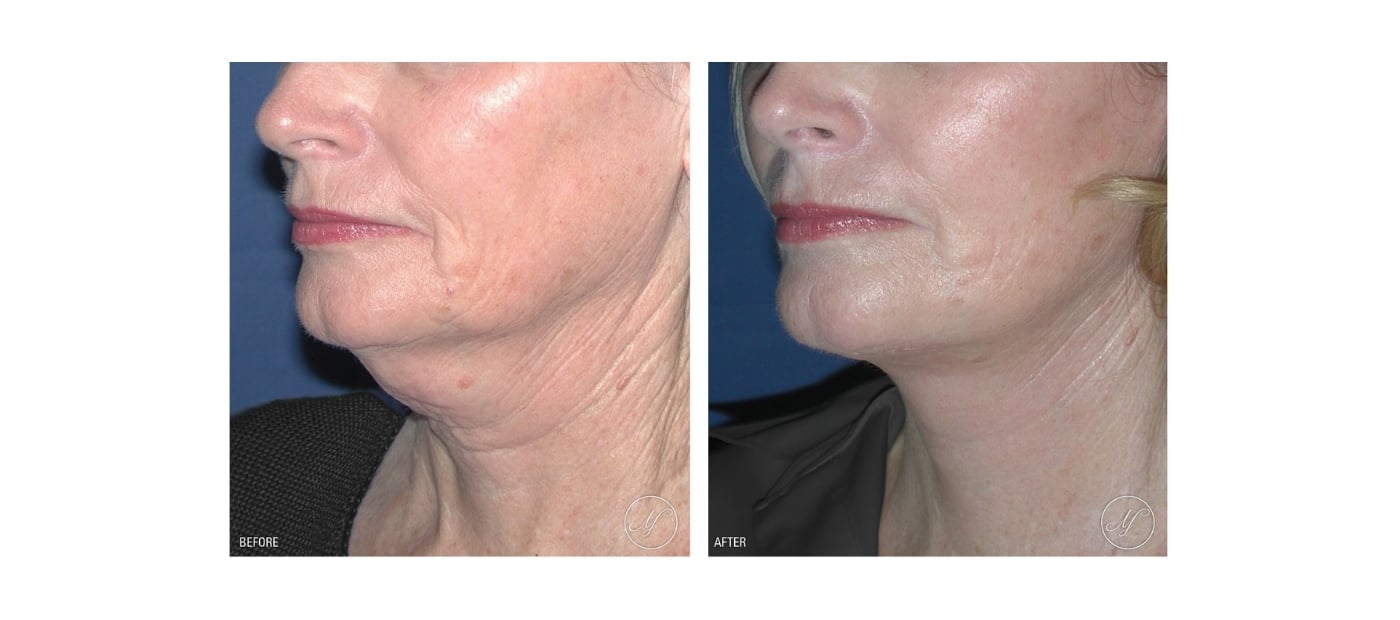
*Actual Patient Disclaimer: there is no guarantee of specific results and the results can vary.
In Dr. Morwood's Words:
I am a perfectionist by nature, and even though truly perfect results are never possible, I am compelled to strive to obtain them.
David T. Morwood, MD, FACS
The Truth About Plastic Surgery: An Educational Guide for the Consumer
This Procedure Treats:
- Unsatisfactory results from a prior facelift procedure
- Residual or recurrent skin laxity and sagging
- Asymmetry or unnatural appearance following previous surgery
- Visible scarring or distortion from earlier work
- Continued facial aging after an initial facelift
Refine Results After Prior
Facial Surgery
A revision facelift is a secondary facial rejuvenation procedure performed to improve or refine the results of a prior lift. Over time, the unrelenting downward pull of gravity, continued volume loss, and changes in texture may alter your appearance again. In Dr. Morwood’s practice, a careful preoperative analysis is performed, evaluating each anatomic layer: skin, volume, and soft tissue descent. Your procedure is custom-designed to reposition, re-volumize, and refine prior work, restoring a more natural and attractive outcome.

A Revision Facelift Treats:
- Recurrent sagging of the lower face, jowls, and neck
- Descended soft tissues due to the downward pull of gravity
- An overly pulled, tight, or unnatural appearance
- Residual skin laxity or irregular redraping of the skin
- Loss of volume in the midface and cheekbones
- Deepened nasolabial folds and marionette lines
- Poor definition of the jawline and neck contour
- Facial asymmetry or imbalance from prior surgery
- A prominent or disrupted eyelid-cheek junction
What to Expect From a Revision Facelift With Dr. Morwood
Your consultation with Dr. Morwood begins with a review of your medical history, operative history, scars, and current concerns. As you look in the mirror together, he listens carefully and asks what you would like to change. He then performs a careful preoperative analysis of each layer, evaluating skin texture, residual volume loss, skeletal support, and the degree of soft tissue descent. He may also review older photographs to assess how your face has aged, and Vectra 3D imaging may help you visualize potential outcomes.
During your revision facelift, Dr. Morwood works through existing or modified incision patterns whenever possible. The soft tissues are carefully elevated, often at the level of the SMAS and platysma, allowing precise repositioning of descended structures. Volume may be restored using autologous fat grafting to the midface, while superficial tissues are redraped without tension. Excess skin is conservatively removed, and deeper support layers are secured to create a stable, natural, long-lasting outcome without an overly pulled appearance.
Videos

The Truth about Plastic Surgery: Facial Rejuvenation
Facial Rejuvenation Seminar | Dr. David Morwood
Will I Look Pulled or Tight After a Revision Facelift?
One of the most common concerns you may have is about looking “overly pulled” or unnatural. In Dr. Morwood’s practice, this is specifically avoided by focusing on proper vectoring of the soft tissues, conservative redraping of the skin, and restoration of volume where needed. Instead of simply pulling the skin tight, deeper structures are repositioned and supported, resulting in a more natural, vibrant, and attractive outcome.
Revision Facelift FAQs
Is Volume Loss Important in Revision Facelift Planning?
Yes, and it is often one of the most overlooked factors. As you mature, loss of volume in the midface can lead to flattening of the cheeks, prominence of the tear trough, and deepening of folds. Simply lifting the skin will not address this. In many cases, Dr. Morwood incorporates a “lift and fill” approach, strategically restoring facial volume with fat grafting or dermal fillers to improve projection and contour while maintaining a natural look.
How Long Do the Results of a Revision Facelift Last?
A revision facelift can provide long-lasting improvement, but it does not stop aging. Over time, gravity, volume loss, and changes in skin quality will continue to affect your appearance. That said, by addressing all three angles of the facial rejuvenation triangle (skin texture, volume, and soft tissue), your results are more likely to appear natural and to last for many years.
Have More Questions?
Learn More About Facial Rejuvenation in The Truth About Plastic Surgery: An Educational Guide for the Consumer
If you want a deeper understanding of a facelift and facial rejuvenation, Dr. Morwood’s book The Truth About Plastic Surgery: An Educational Guide for the Consumer provides clear, detailed insight. You will learn how the aging process affects each anatomic layer of the face, how a custom-designed approach is developed, and why techniques such as “lift and fill” lead to more natural results.
Client Testimonials
Request a Private Consultation
Refine and Enhance Prior Results With a Revision Facelift in Monterey
Dr. David Morwood is a board-certified plastic surgeon with over 30 years of experience and advanced fellowship training in microsurgery. During your private consultation, you will review your medical history, prior procedures, and goals together in front of a mirror while he performs a detailed analysis. Using tools such as Vectra 3D imaging, he develops a custom-designed plan focused on producing natural, balanced facial rejuvenation results. Schedule your consultation today to discuss your revision facelift in Monterey.
Book Today
